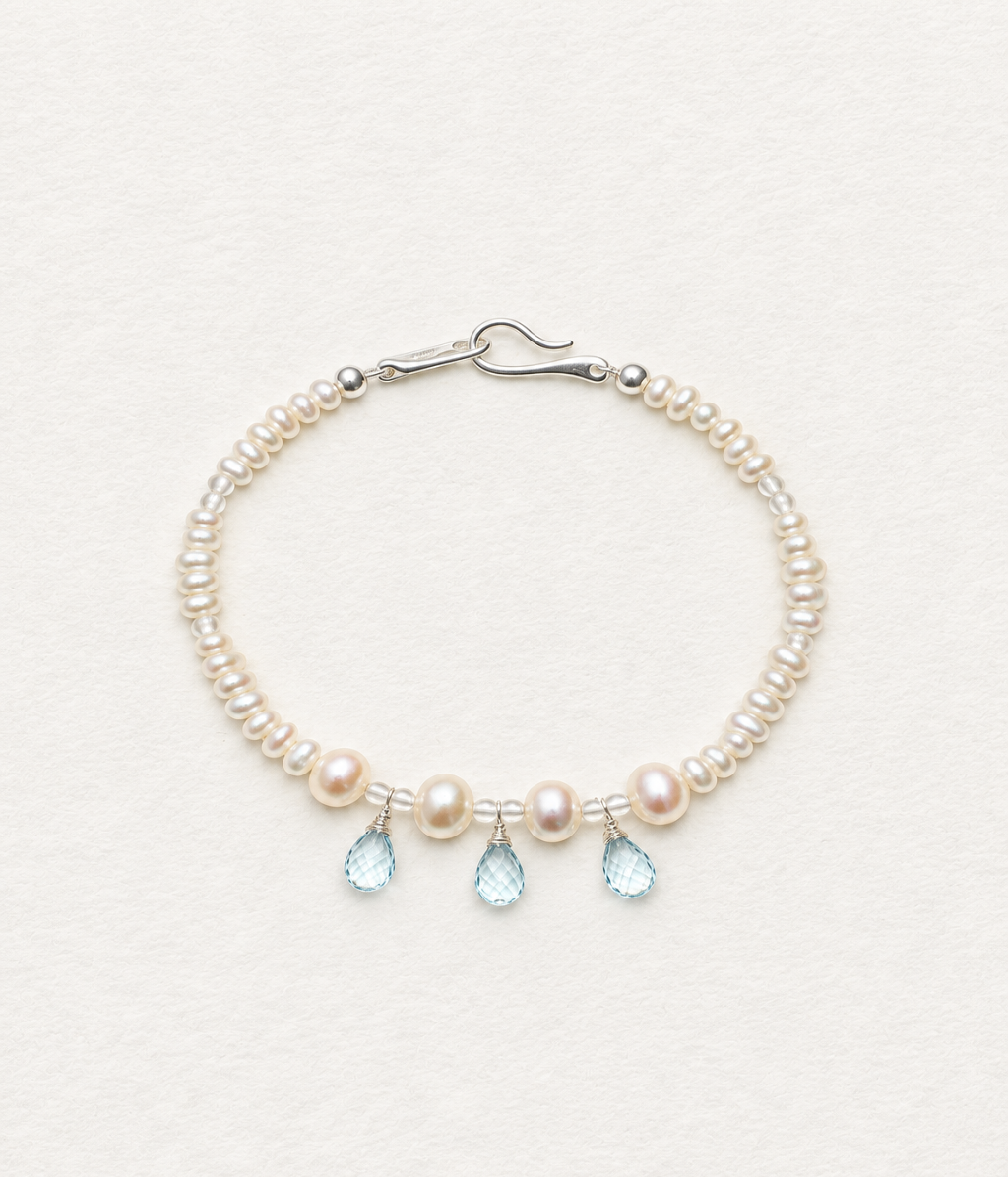

How to Tell If Rose Quartz Is Real: A Practical Buying Guide
How can you tell if rose quartz is real? Start with a clear material description, examine the piece without damaging it and ask the seller specific questions. A photograph, cool touch or scratch test cannot give you the certainty of professional gemstone identification.
That may feel less satisfying than a five-second trick, but it is a better way to buy jewelry you can feel confident about. This guide explains what you can check yourself, what common claims leave out and how to decide whether further testing makes sense.
What Does “Real Rose Quartz” Actually Mean?
Before checking a piece, decide what you want the seller to confirm. Several different questions are often bundled into the word “real”: the identity of the material, whether it formed naturally, whether it was treated and where it came from.
- Identity: is the pink material rose quartz, or an imitation sold to resemble it?
- Natural origin: did it form in nature, rather than being laboratory-grown?
- Treatment: has anything been done to change its appearance?
- Geographic origin: is a claimed country or mine supported by information about this stone?
These questions are related but not interchangeable. Knowing a material is quartz does not automatically establish its geographic origin or treatment history. A listing should be clear about what is known and what is not.
Likewise, a mixed-stone bracelet does not need to consist entirely of rose quartz. The useful question is whether the seller correctly identifies all the materials, rather than allowing the product name to stand in for the whole description.
Start With the Listing, Not a Home Experiment
The first check requires no equipment. Read the product title, material description, dimensions, care advice and return terms together. Do they describe the same piece?
Look for the exact name “rose quartz.” Phrases such as “rose-colored crystal,” “pink gemstone look” or “quartz-inspired” leave room for a different material. That does not automatically make a product bad; it means you should understand what is being offered before paying for it.
For jewelry with several components, ask which beads or stones are rose quartz and what the others are. Also check whether the metal is described clearly. A stone claim does not establish whether a clasp is solid silver, plated or another material.
A useful listing should help you make a decision without asking you to decode a string of romantic adjectives. If the information is incomplete, request clarification in writing so you can refer back to it.
What You Can Check Without Damaging the Stone
1. Compare Photos Taken in Different Lighting
Ask for an ordinary daylight photograph or a short video of the actual piece when possible. A studio image can show design beautifully, while an additional everyday image helps you judge scale and color.
Do not compare a phone photograph directly with a screen and treat a color difference as evidence of fraud. White balance, exposure, background color and your display all affect how pink appears. Instead, ask whether the seller's images give a consistent impression across several views.
If a photograph is described as representative, clarify how much variation to expect in the item you will receive. That matters for natural materials, but it also matters whenever a retailer photographs one sample from a larger batch.
2. Look at the Surface and Interior Separately
A shiny surface describes polish; it does not prove what is underneath. Use the images to distinguish surface reflections from features visible inside the stone.
Typical rose quartz often has a cloudy appearance, but cloudiness is not a certificate of identity. Conversely, a clearer piece is not automatically fake. GIA's buying guide discusses the range of clarity found in rose quartz.
Look for areas you want explained rather than declaring a verdict. You might ask whether a visible line is internal, whether a rough spot is a chip or whether the photograph shows a reflection from the setting.
3. Check Edges, Drill Holes and Assembly
For a bracelet, zoom in on bead holes, connections and the clasp. You are looking for workmanship and condition: obvious chips, uneven finishing, exposed sharp edges or components that do not match the description.
This inspection does not identify the gemstone, but it helps answer another question that matters just as much: will you enjoy wearing the finished piece? A correctly identified stone can still be poorly assembled.
If you already own the bracelet, handle it over a soft surface and avoid pulling at its connections. A loose component is a reason to contact the seller or a jeweler, not a reason to keep stress-testing it.
4. Ask About Treatments Directly
“Natural” does not necessarily mean “untreated.” GIA notes that rose quartz is occasionally irradiated to intensify its color. Ask whether any treatment is known or disclosed, rather than assuming that either all stones are treated or none are.
A seller may not have a laboratory report for every bead. What matters is that the answer accurately describes the available information. “Our supplier identifies it as natural rose quartz; we do not have an individual treatment report” is more specific than an unsupported promise of perfect purity.
5. Treat Price as Context
A very low or very high price does not establish authenticity. The cost of finished jewelry also reflects the design, metal, other materials, construction and service around the sale.
Compare similar pieces and ask what explains the difference. If a premium is attributed to a rare mine, exceptional grade or testing, request the evidence for that particular claim.
Price becomes more useful when you can connect it to something concrete. Paying more because you prefer a design is different from paying more for an undocumented claim about rarity.
Compare the Complete Piece
When browsing LUMERUNE's Rose Quartz collection, read the individual material description as well as the name. Amber Dusk, for example, is described as a combination of tiger's eye, rose quartz, Dalmatian jasper and gray pearls, rather than an all-rose-quartz bracelet.
Popular Rose Quartz Tests That Can Mislead You
“It Feels Cold, So It Must Be Real”
Temperature is not an identification result. What you feel depends on the room, how the object was stored, its size and how long you have held it. Other materials can also feel cool.
You can notice the sensation as part of enjoying a stone, but do not use it to settle a purchase dispute or validate a seller's claim. A pleasant tactile quality and verified identity are separate things.
“Real Stones Always Have Uneven Color”
Natural variation is possible, but visible variation is not required in every finished piece. Beads can also be selected to match one another. A coordinated bracelet is not suspicious merely because its colors look harmonious.
Nor does uneven color prove natural origin. Treat color as something to assess alongside disclosure and, when needed, testing. Avoid rigid rules such as “too perfect means fake.”
“Bubbles Mean Glass, and No Bubbles Mean Quartz”
Do not turn one small mark in a photograph into a diagnosis. Without training, reflections and internal features can be difficult to interpret. Even if a feature raises a question, its absence does not confirm rose quartz.
If you have noticed something concerning, photograph it clearly and ask a qualified gemologist to examine the piece. A social-media checklist cannot replace that examination.
“Scratch a Window or Use a Knife”
Skip scratch tests on finished jewelry. You could damage the stone, another component or the object used for comparison, and still fail to answer whether the stone is natural, treated or from a particular source.
The same principle applies to flame, hot-needle, chemical and drop tests. None belongs in a routine buying check. Keep the piece in its original condition while you ask questions or arrange an assessment.
“The Energy Feels Strong”
Your response to jewelry can be personal and meaningful. It is not a method of material identification. You do not need to dismiss your enjoyment of a piece to ask factual questions about it.
If the symbolic side interests you, explore rose quartz meaning and self-love traditions separately from authenticity. That makes room for both the story and the material facts.
What a Professional Assessment Can Tell You
A qualified gemologist can examine a stone with appropriate equipment and interpret several observations together. Ask what the assessment will cover: material identity, natural versus laboratory-grown origin and any detectable treatment.
GIA explains that its Colored Stone Identification Report can address natural or laboratory-grown identity and detectable treatments; it does not assign a rose quartz quality grade. See GIA's explanation of rose quartz reports.
Do not assume every report includes a geographic origin determination. Ask the provider about the actual service, the limitations of examining a mounted piece and whether the cost is proportionate to your purchase.
For a multi-bead bracelet, clarify whether an assessment covers one tested component or the entire item. A report for a separate loose stone does not automatically document every bead in a finished design.
How to Read “AAA,” “Certified” and Sourcing Claims
If a seller uses “AAA,” ask for the grading criteria and who assigned the grade. Without that explanation, the label does not tell you how to compare pieces across shops.
If a listing says “certified,” ask who issued the document, what was examined and what the result actually states. A certificate's appearance is less informative than its scope and connection to the item.
For a sourcing claim, ask what part of the supply chain is documented. A country name, supplier statement and traceable mine-to-jewelry record are different levels of information. Decide what matters to you, then look for evidence at that level.
A Short Message You Can Send Before Buying
Could you confirm which components are natural rose quartz, whether any treatments are known, and what materials are used for the other stones and metal? Is the photo of the actual piece or a representative sample? If a report is included, please let me know who issued it and which item or components it covers.
You do not need to send every question for every purchase. Choose the ones relevant to the listing. A straightforward answer should help you understand the piece rather than make the decision feel more mysterious.
What to Do If Your Jewelry Has Already Arrived
- Keep the packaging and save the original listing and order details.
- Compare the item with the stated materials, dimensions and photographs.
- Take clear pictures of anything that concerns you, without altering the piece.
- Contact the seller with the specific discrepancy and the outcome you want.
- If identity remains disputed, ask about an independent assessment before attempting any test.
Check the applicable return terms promptly. For a LUMERUNE order, use the returns and exchanges guide as a starting point, and refer to the current policy for the terms that apply.
Frequently Asked Questions
Can I identify real rose quartz from a photo?
You can evaluate the listing and note features worth asking about, but a photograph alone cannot conclusively identify the material or establish its treatment history.
Does real rose quartz have to be cloudy?
No. Cloudiness is common, but appearance varies. Neither cloudiness nor clarity should be used as a standalone authenticity test.
Does every real rose quartz bracelet need a laboratory report?
A report is not automatically necessary for every purchase. Consider the value, the claims being made and the level of certainty you need; clear disclosure still matters at any price.
Is treated rose quartz the same as an imitation?
No. Treatment changes a material's appearance; an imitation is a different material presented to resemble it. Ask which description applies instead of treating those terms as interchangeable.
Will cleaning tell me whether the stone is real?
No. Do not clean jewelry as an experiment to expose its identity. Follow the care instructions for rose quartz jewelry and ask a professional about any unresolved material question.
Buy With Clear Information
The most useful rose quartz authenticity check is a combination of accurate disclosure, sensible inspection and professional help when the decision calls for it. You should know what you are buying without risking damage to find out.
Explore rose quartz jewelry with your preferences in mind: a design you enjoy, a comfortable fit and material information you understand.