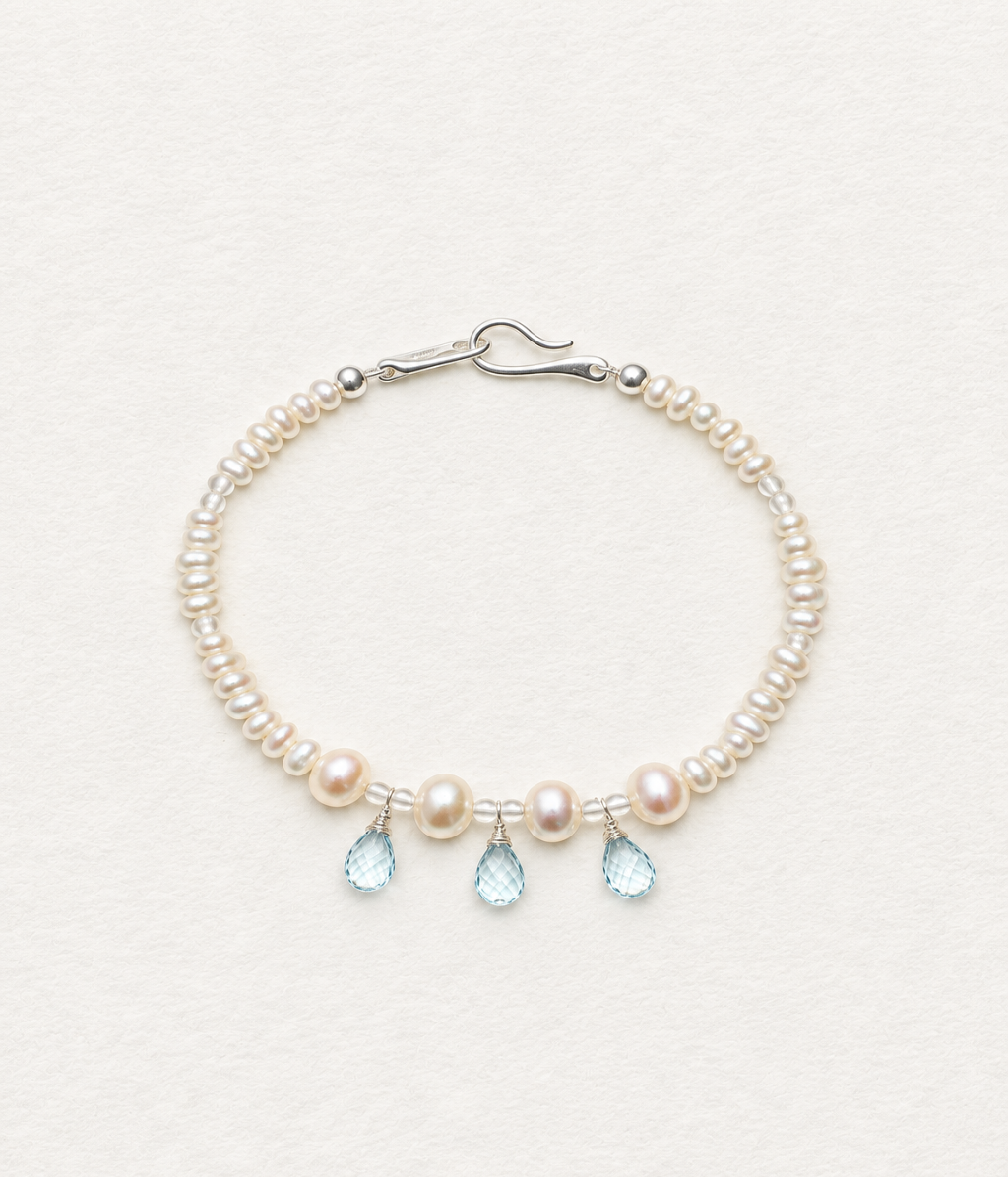

Freshwater Pearl Necklaces: Cultured Pearls, Types and Labels
A necklace description says "freshwater pearl." The next one says "cultured pearl." Both may describe the same material, because those words answer different questions about how a pearl grew.
Start with the label. Freshwater describes the growing environment, while cultured means people initiated the pearl's growth in a mollusk. A freshwater cultured pearl is a real pearl. "Natural pearl" means a pearl that formed without human intervention, while most pearls sold in jewelry today are cultured, according to GIA's explanation of the distinction.
What grows inside a cultured pearl?
The familiar glow comes from nacre, the layered material produced by the mollusk. Pearl farmers start growth by introducing mantle tissue, sometimes together with a bead nucleus, and the mollusk builds the pearl over time. GIA describes these methods in its pearl formation guide.
The bead question matters. Many freshwater cultured pearls grow without a bead nucleus, but bead-cultured freshwater pearls also exist. You can't assume that every freshwater pearl is solid nacre all the way through, or use the word "cultured" to work out its internal structure. GIA's freshwater and saltwater pearl guide covers both methods.
On a product page, keep the growth method separate from the design, since a round necklace and an irregular one could both contain freshwater cultured pearls. Then choose a shape you enjoy wearing.
The four pearl types you will meet in necklace descriptions
Freshwater, Akoya, Tahitian and South Sea are the four major cultured pearl categories described by GIA. The table gives a starting point for reading a listing, with broad descriptions that cannot identify a particular necklace from its photograph or establish where it was grown.
| Pearl type | Growing environment | Appearance you may encounter |
|---|---|---|
| Freshwater cultured | Freshwater lakes and ponds, with China a leading source | White and pastel colors across round, oval and irregular shapes |
| Akoya cultured | Saltwater, including production in Japan and China | White or cream pearls associated with classic strands |
| Tahitian cultured | Saltwater, primarily French Polynesia | Gray, dark and brownish bodycolors, sometimes with colored overtones |
| South Sea cultured | Saltwater, including Australia, Indonesia and the Philippines | White, silver or golden pearls, including large sizes |
These descriptions are adapted from GIA's overview of pearl types. There is overlap. Size and color alone cannot establish a pearl's type, and a dark pearl needs a clear material description before you treat it as Tahitian.
Baroque describes a shape
Look at the outline. Baroque pearls have irregular, asymmetrical forms, a shape category included in GIA's pearl classification guide that gives you no automatic answer about freshwater or saltwater origin, treatment, or quality.
For a necklace, those irregular shapes change how the design sits. A broad pearl can turn on its side, while an elongated one may hang below the line of the beads around it. Ask for a full-necklace photograph as well.
LUMERUNE's guide to our jewelry materials explains the variations in shape and surface that can appear in its pearls. Those variations deserve clear photographs. A visible mark is something to inspect, not a certificate of authenticity.
Imitation pearls and color treatments need separate descriptions
Imitation pearls can be made from glass, plastic or shell with a coating that resembles a pearl's surface. GIA documents these materials in its laboratory note on imitation pearls. A shell-based imitation is still a manufactured substitute, even though its starting material came from a mollusk.
Color raises a different question. A pearl can be cultured and have a treated color, with dyeing, coating and irradiation among the treatments identified in GIA's pearl care guide. "Real" on its own leaves that information unresolved.
Ask the seller directly: "What type of pearl is used, and are any color or surface treatments known?" Keep the answer with the product description. If the seller cannot confirm something, leave it recorded as unknown rather than filling the gap from a photograph.
How much can you verify at home?
Handle the necklace gently. Close inspection can show wear around drill holes, a loose clasp or a surface that needs a closer look, but an attractive finish cannot establish how a pearl formed.
GIA uses X-radiography and other testing methods to distinguish natural and cultured pearls, work that a tooth test, a scratch test or a photograph cannot replace. For a necklace sold specifically as rare natural pearls, ask what independent documentation supports the claim before buying.
For a piece you plan to wear regularly, our pearl necklace buying guide explains how to inspect its finish, construction and fit without assigning a laboratory grade yourself.
Reading a LUMERUNE necklace listing
Midnight Tide is described in its product listing as a necklace combining black tourmaline, freshwater pearls and sterling silver. That gives you a concrete example of how pearls can sit within a design made from several materials, with dark faceted stones beside the pearls.

Use the current listing for the exact materials and dimensions. Missing a detail? Contact LUMERUNE with the product link. Once you have a necklace, use the pearl necklace care guide before choosing a cleaner.
About this guide: Prepared for LUMERUNE with AI assistance using the gemological sources linked above. Sources checked September 5, 2026. This educational article draws its product examples from LUMERUNE's catalog, without claiming hands-on testing, independent gemologist review or laboratory certification of the necklaces shown. For a factual correction or product question, use our contact page.