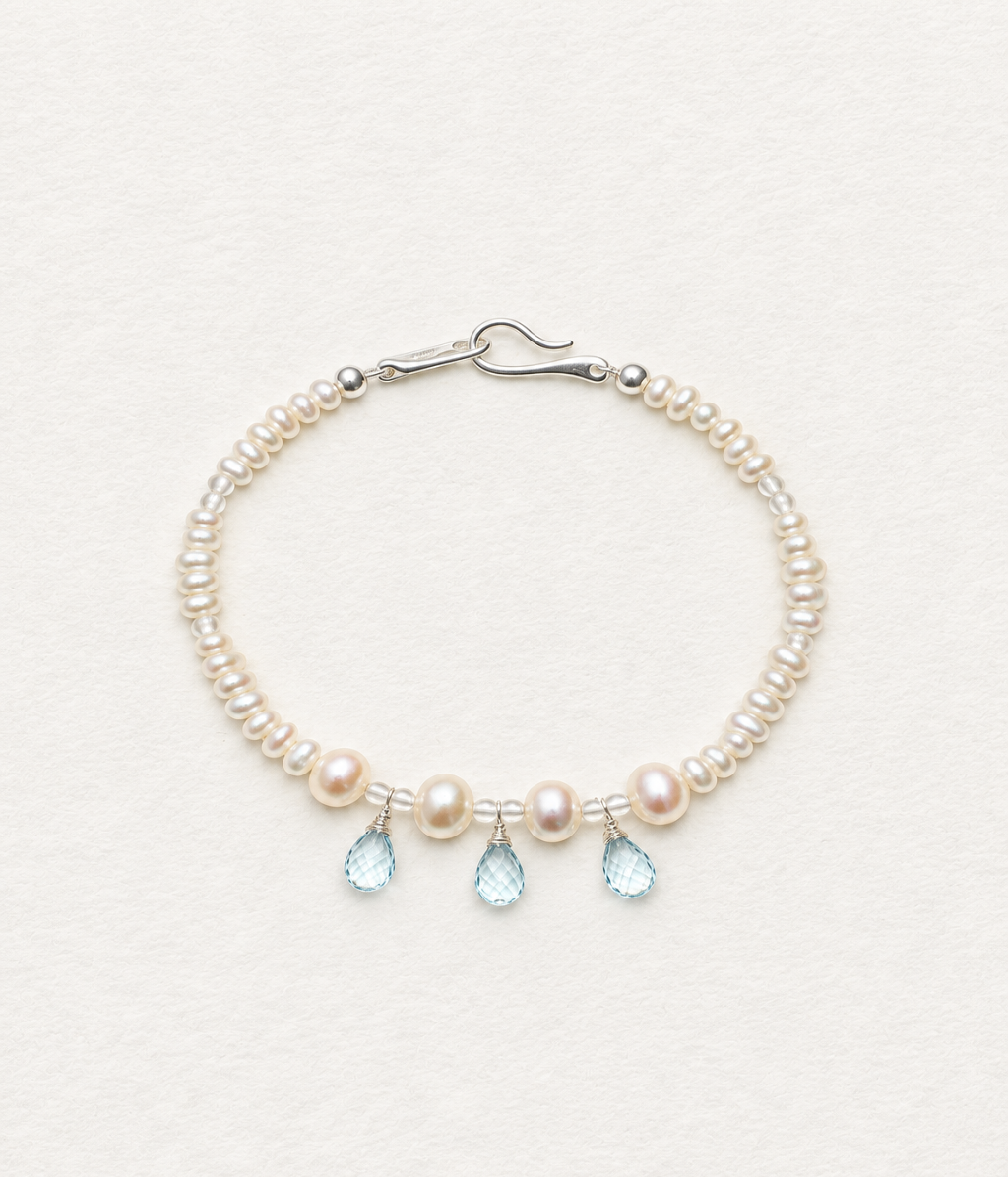

How to Care for a Pearl Necklace, From Cleaning to Storage
You take off a pearl necklace and notice a little makeup on the pearls near the clasp. Start with a very soft, clean cloth. A necklace with pearls, crystals and silver needs a gentler approach than a metal chain you can polish from end to end.
First, check its construction. A knotted strand, a pearl pendant and a necklace with several connected sections have different places where moisture or residue can collect. Keep the product's care instructions beside you if you need anything beyond a dry wipe.
After wearing it, wipe and put it away
GIA recommends wiping pearls with a very soft, clean cloth after each wear, and identifies perfume, cosmetics and perspiration among the substances that can damage them.
Support the necklace on a soft towel while you wipe accessible surfaces. Work gently. Dragging a cloth along the whole strand can catch around a clasp or a projecting bead, so move section by section and leave anything stubborn for a closer inspection.
Choose a plain cloth. A cloth sold for polishing silver may contain polishing compounds and should be kept away from pearl surfaces unless its maker explicitly says it is suitable for pearls.
For necklaces combining crystals and pearls, this follows the routine in our existing LUMERUNE jewelry care article. Dry wiping is the starting point when the finish, treatment or stringing material is uncertain.
When a dry cloth leaves residue behind
GIA allows warm soapy water for occasional pearl cleaning and says a strung necklace's thread must dry completely before it is worn. That guidance concerns pearls. The other materials and connections in a finished necklace still need checking.
For a LUMERUNE piece, follow the Jewelry Care Guide and its product-specific instructions. Begin with a soft cloth only slightly dampened with lukewarm water, then remove surface moisture with a dry cloth. Avoid immersing the whole necklace while its construction is unknown.
Use soap only after confirming it suits the complete piece. For a suitable pearl strand, a small amount of mild soap on a soft, damp cloth can help lift residue, followed by a separate cloth dampened with clean water. Keep moisture to a minimum and support the strand as you work.
Lay it flat to dry. Jewelers of America advises drying cultured pearl strands flat, because hanging them can stretch the thread, which should dry fully before you wear or store the necklace.
Skip the hair dryer. GIA warns that high heat can discolor or crack pearls, so trying to hurry the drying stage introduces another avoidable exposure.
Keep these cleaners away from pearls
GIA rules out ultrasonic and steam cleaning for pearls. Abrasives can scratch the surface, so avoid scrubbing a pearl to remove a stubborn spot that gentle wiping has left behind.
Leave toothpaste and abrasive powders in the bathroom cupboard. LUMERUNE's care guidance also advises against bleach and household cleaners, and against soaking a piece simply because one of its gemstones tolerates water.
A cleaning recipe for silver does not establish that the pearls beside it can tolerate the same treatment. If tarnish sits in a tight gap beside a pearl, ask a jeweler how to clean that component without exposing the pearl to the cleaner.
Persistent discoloration needs inspection. Stop if a surface appears to be flaking or changes while you wipe it, and take a photograph before trying another product.
Mixed gemstone necklaces need care for every component
Consider Moonveil Trace. Its listing includes amethyst, clear quartz, blue moonstone, pearl and black phantom quartz. Looking up a cleaning method for quartz alone leaves several parts of that necklace unaccounted for.

Our practical recommendation is to keep a mixed necklace on a towel and wipe only the areas you can reach without pulling the components. If cleaning requires pushing between pearls, twisting a connector or repeatedly wetting thread, ask for advice about the exact design.
Terms such as freshwater, cultured and baroque describe different aspects of pearls. The pearl types and labels guide explains them, but none of those labels makes a finished necklace suitable for every jewelry cleaner.
Perfume, showers and the necklace you wear most
Apply perfume and cosmetics before putting on pearl jewelry, as Jewelers of America recommends, and let them dry before the necklace touches your skin. Remove it before another spray.
LUMERUNE recommends removing pearl jewelry for showering, swimming, exercise and sleep. For a necklace worn to work, put a small soft pouch in your bag so there is somewhere separate to place it before a gym session or an unexpected swim.
Check where layered necklaces touch. If a metal chain or pendant repeatedly rubs against a pearl, change the spacing or wear the pieces separately. Our guide to choosing a pearl necklace includes length and construction questions that help when planning a layered look.
Store the strand without tangles or pressure
Give it its own compartment. Jewelers of America advises protecting pearls from harder gemstones and metal edges, using a soft pouch or protective wrapping rather than placing pieces loose together.
Lay the strand flat in a lined compartment. Keep its clasp clear of the pearls. When packing a necklace with several strands, arrange them loosely side by side instead of winding them tightly around one another.
Choose a place away from direct heat and prolonged sunlight, consistent with LUMERUNE's care guidance. At a hotel, use the pouch you brought rather than a bathroom shelf where the necklace could get splashed or swept into a washbag.
A loose clasp needs attention before another wear
Stop wearing a necklace if a clasp opens unexpectedly, a connector looks bent or thread starts to fray. Keep any loose components together, and photograph the whole piece as well as the affected area.
Jewelers of America recommends periodic professional attention for pearl stringing. For a mixed necklace, the appropriate service depends on its construction and condition, so ask what needs inspecting instead of assuming every design needs the same restringing schedule.
For a LUMERUNE piece, follow our warranty and repair support instructions. Send the product name, order details and clear photographs through the contact information there before mailing jewelry for assessment.
About this guide: Prepared for LUMERUNE using GIA, Jewelers of America and LUMERUNE's published care guidance. Sources checked September 5, 2026. The handling suggestions adapt that guidance to necklace use, with no hands-on cleaning tests or independent gemologist review claimed. For advice on a specific necklace or a factual correction, contact LUMERUNE.