
How to Choose a Pearl Necklace: Luster, Shape and Fit
Two pearl necklaces fill your screen. One photograph is bright enough to hide the surface, and the other gives you a close-up but no sense of where the necklace will sit. Before comparing prices, get the missing views.
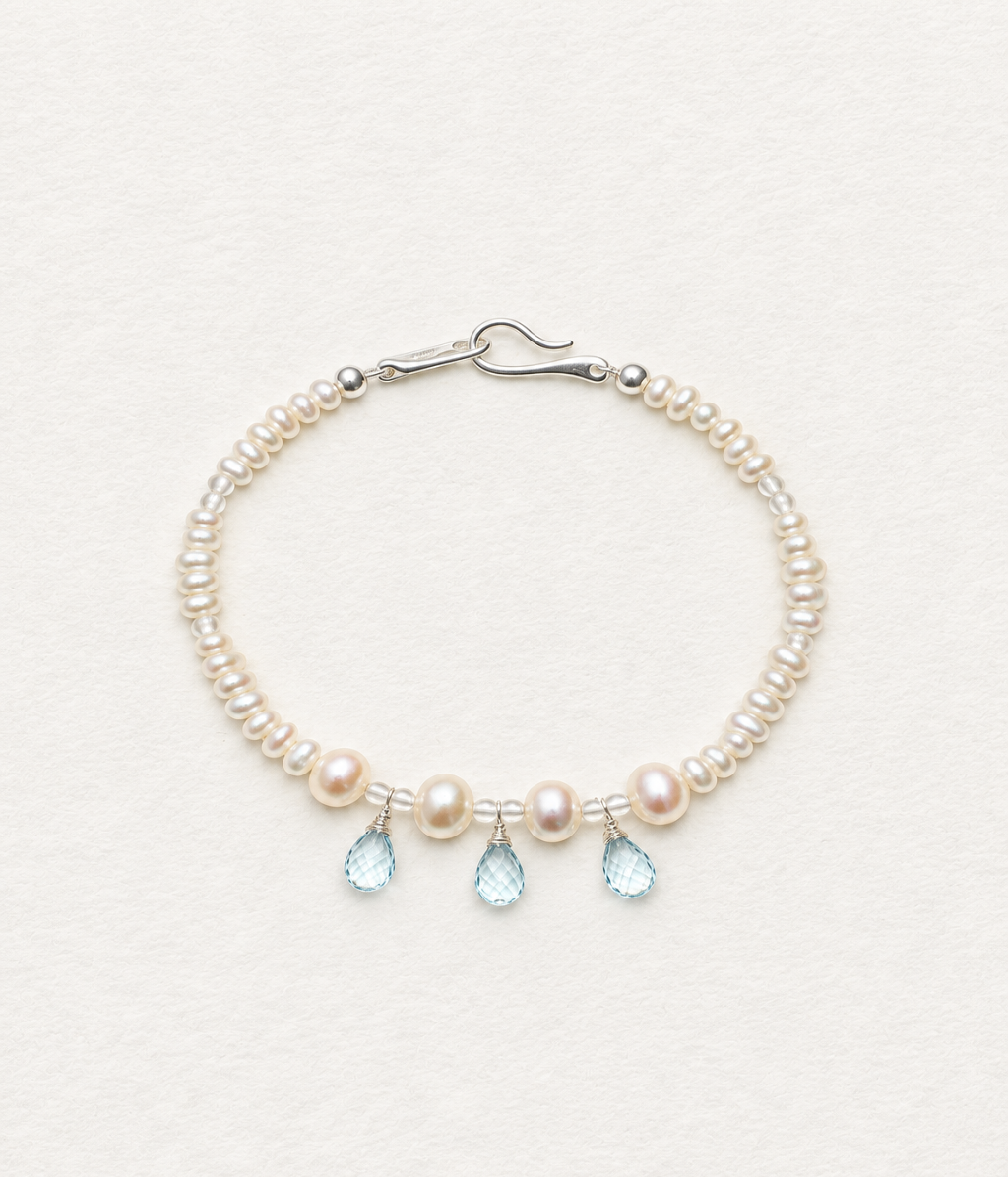
Ask for the whole necklace against a plain background, a close-up of several pearls and a photograph of the clasp. Then check the dimensions. Those details let you compare the finished piece, including the parts a carefully cropped image leaves out.
Start with the light on the pearls
Luster is the brightness and definition of a pearl's reflections. In GIA's pearl quality guide, stronger luster has brighter, clearer reflections, while lower luster looks dim or blurred. GIA also stresses that pearl types need to be considered on their own terms.
Compare under similar lighting. A small white reflection from a lamp can appear on many glossy surfaces, so a single bright spot in a photograph tells you little about the rest of the pearl.
Ask for a short video in even light, with the strand turned slowly enough to see several sides. Watch a few pearls along the necklace instead of fixing on the brightest one at the center. At home, look beside a window out of direct sun, then step back to see the whole piece at an ordinary viewing distance.
This is a visual comparison. It cannot measure nacre thickness, authenticate a pearl or reproduce a laboratory classification.
Surface marks need context
A small spot beside a drill hole and a deep crack across an exposed face deserve different attention. GIA evaluates surface characteristics by their extent and severity, noting that some can affect durability as well as appearance.
Inspect the position. A shallow mark on a pearl near the clasp may hardly catch your eye when worn, while the same mark at the front could bother you every time you put the necklace on. Decide what you can comfortably accept from clear photographs.
If an area looks cracked, peeling or unusually chalky, ask for a close-up even when the description refers to "natural variation," so you can see the condition for yourself. The LUMERUNE materials guide explains our catalog wording.
Shape, color and the rhythm of a strand
A classic strand repeats similar pearls, whereas a necklace built around irregular shapes can vary across its length. GIA's seven pearl value factors include shape, color and matching, alongside size, luster, surface and nacre quality.
Matching depends on the design. In an evenly graduated strand, look at how sizes progress toward the center. With an intentionally varied necklace, inspect the balance between sections and whether one pearl looks out of place to you.
Color has layers, too. GIA distinguishes a pearl's main bodycolor from overtones and the rainbow effect called orient. Try it against your clothing. A cream pearl against warm beige can look quite different from the same pearl over a black shirt, which is easy to miss in photographs taken on a white background.
For a blue-and-white example, Midnight Current pairs lapis lazuli with pearls and silver beads, with elongated pearls that interrupt the line of the smaller components described in its listing. Use the full necklace view to check how the elongated pearls sit among the smaller beads.

Ask what a grade or report covers
If a listing says "AAA," ask for the seller's written criteria before comparing it with another shop's wording, since a label without a definition tells you little.
GIA's approach evaluates seven separate factors. Its 2025 update to nacre classification also considers continuity and disruption within nacre, reinforcing why a surface photograph cannot tell the entire story of pearl quality.
A report needs checking. Request the issuing laboratory, report number and a copy whose description matches the necklace being offered. Ask whether it covers the complete strand or selected pearls, and which questions it answers about identity, treatment or quality. GIA explains the testing behind its reports in How GIA Identifies and Classifies Pearls.
For natural-versus-cultured terminology, start with our guide to freshwater pearl necklaces and labels. A seller's description of a pearl's origin and your preference for its appearance are separate pieces of the purchase decision.
Check the clasp and the length you will wear
Read the measurement first. LUMERUNE's current listings give Earthbound Glow as 42 cm, Moonveil Trace as 45 cm and Midnight Current as 46 cm. Those figures describe necklace length, not a guaranteed position on everyone's body.
For a rough preview, cut a piece of non-stretch string to the listed length and hold it around your neck with the top you plan to wear. Keep it loose. This preview can reveal a length that clashes with the neckline, although the thickness of beads and the drape of several strands will still change the fit.
Our necklace size guide explains how body frame, pendant drop and neckline affect placement. If a design has several strands, ask which one the listed measurement refers to and whether an extension is included.
The clasp deserves a photograph of its own. Check the stated metal and where the strands connect, then consider whether you can comfortably manage the closure with your hands without having to pull on the pearls. Ask about stringing if the description omits it.
Before you place the order
Save the product description with the seller's answers. Before ordering, read the current return conditions, especially when you are choosing between lengths or buying a gift and may need to arrange a return.
Leave room for the care routine, too. A necklace that combines pearls with crystals and metal needs cleaning suited to the complete piece, as explained in our pearl necklace care guide.
If one measurement remains unclear, send LUMERUNE the product link with your question before checkout. Ask whether the stated 46 cm includes the clasp.
About this guide: Prepared for LUMERUNE with AI assistance using the gemological references and product listings linked above, checked September 5, 2026. The examples are editorial suggestions. No hands-on tests, independent gemologist review or certification of LUMERUNE products is claimed, and readers should check dimensions and availability on the current listing.