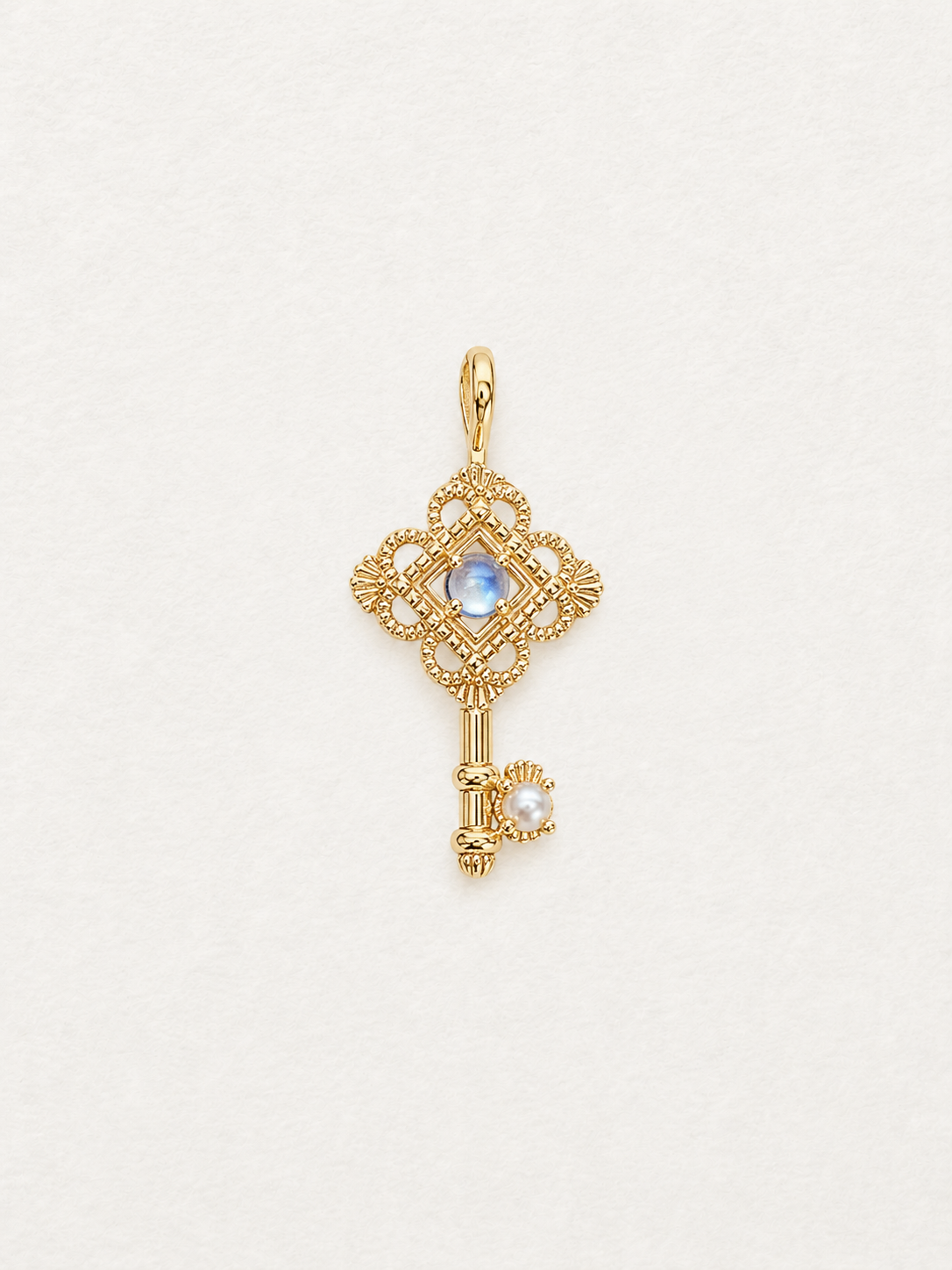

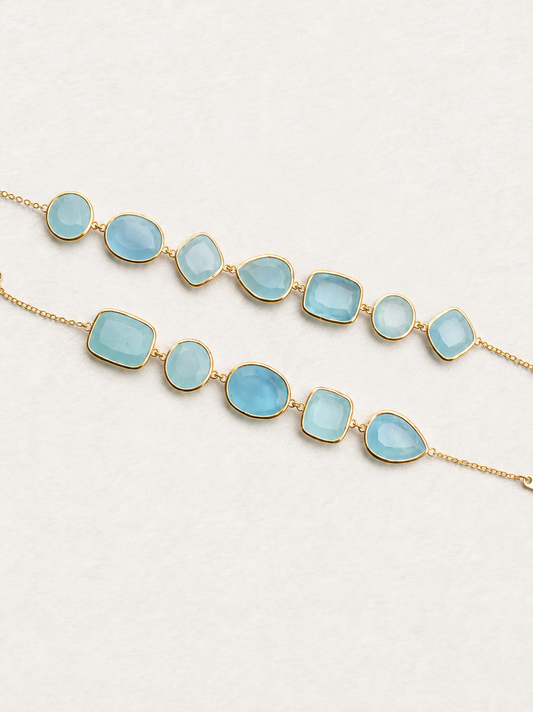

- Prix habituel
- Du $425.00
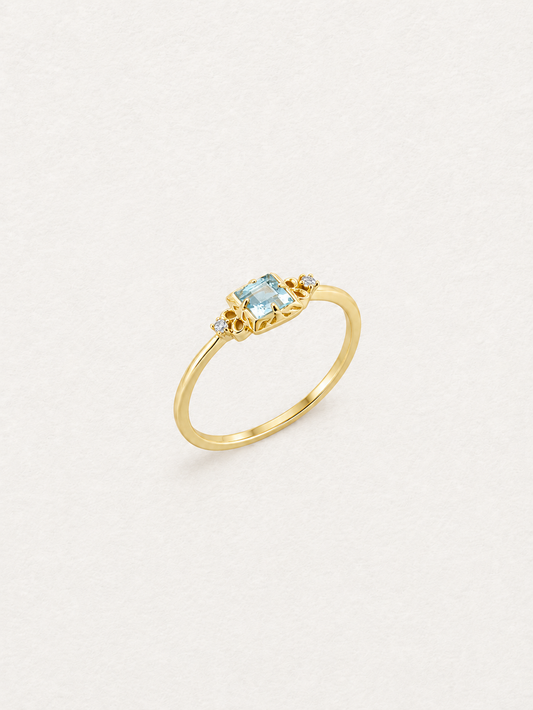

- Prix habituel
- $275.00
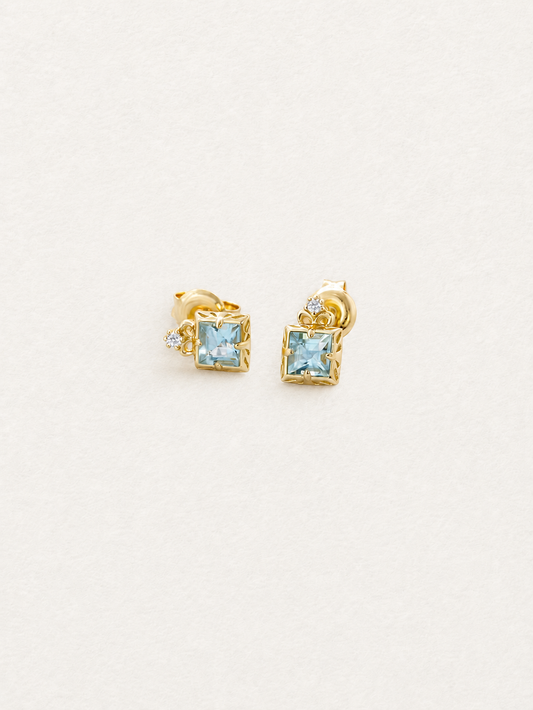

- Prix habituel
- $270.00

- Prix habituel
- $285.00
THE MARCH GUIDE
Two March stones, with different colors and buying questions.
Choose a March gift by its look
Pale blue light or a deeper green accent.
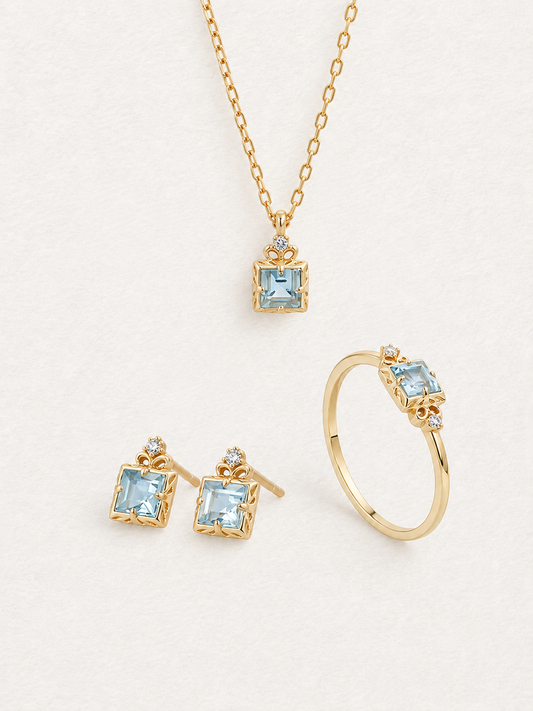
Aquamarine and bloodstone are March’s birthstones. Compare the recipient’s favorite colors and the scale of jewelry they wear. Our current March edit features aquamarine designs; bloodstone is included here to explain the month’s other option.
For the pieces above, check the stone dimensions, metal, fastening and selected size. Our size guide helps you compare fit before ordering.
Aquamarine vs bloodstone
Appearance, wear and what to check.
Their different looks give March more than one direction. Choose by the actual design and the wearer’s routine rather than relying on a hardness number alone.
| Detail | Aquamarine | Bloodstone |
|---|---|---|
| Appearance | Blue to greenish-blue beryl, often transparent. | Opaque dark-green chalcedony, often with red spots. |
| Hardness | About 7.5–8 on Mohs; protect from hard knocks. | About 6.5–7 on Mohs; protect from scratches and abrasion. |
| Visual choice | A lighter, transparent accent for someone drawn to blue. | A darker, patterned look for someone who enjoys green. |
| Check | Known treatment information, dimensions, setting and photographs in ordinary light. | Accurate material name, pattern, dimensions, setting and care instructions. |
Read the March jewelry buying guide for treatment and evidence questions. Gemstone background: GIA March birthstones.
What aquamarine heat treatment means
Natural origin and treatment are separate questions.
Heating is commonly used to reduce green tones in aquamarine. A natural stone may have been heated, so ask what the seller knows and what is documented.
Online color cannot prove whether a stone was heated. Some heating may also be difficult for a laboratory to determine; a report without a heat statement should not be treated as proof of an unheated stone.
Make room for careful everyday wear
Consider the entire design and its condition.
Hardness describes scratch resistance, not the chance of surviving every impact. Remove jewelry for rough work, keep pieces from rubbing together and inspect the setting if it receives a knock.
Follow the product’s instructions and our care guide. Internal fractures, treatments and mixed materials can affect cleaning choices, so ask before using a machine. The March birthstone overview gives more background.
March birthstone questions
What are March’s two birthstones?
Aquamarine and bloodstone. This collection currently features aquamarine; the two-stone month association does not mean both are available here.
Does heat treatment mean aquamarine is laboratory-grown?
No. Formation and treatment are different. Natural aquamarine can be heated, and the treatment should be described according to what is known.
Can a blue photograph prove aquamarine is unheated?
No. Lighting and camera settings affect color, and photographs cannot reliably establish treatment history. Ask for the seller’s disclosure and the limits of any report.
Is aquamarine always more durable than bloodstone?
Aquamarine generally resists scratching better, but overall durability also involves toughness, condition, setting and activities. Hardness alone does not rank every kind of damage.